Life and work inside the NBA’s bubble at ESPN’s Wide World of Sports complex in Orlando is a massive logistical undertaking, one that deserves its own chronicling.
The Washington Post‘s Ben Golliver will be writing a book on his experience as a reporter in the bubble, in addition to the unprecedented circumstances faced by the NBA teams who were invited to Orlando to restart and finish the 2019-20 season. Maybe a documentary on producing game telecasts for ESPN, Turner, and regional sports networks will eventually be produced as well.
Whether or not such an audience exists for such a behind-the-scenes account is a question worth asking there. Perhaps that’s just a bit too niche, except for diehard sports media fans, reporters, and analysts. Including high-profile broadcasters and personalities, along with NBA players, coaches, and executives would surely help.
But if such a documentary is never made, a feature by the Los Angeles Times‘ Andrew Greif takes readers off the court and into the production truck and broadcast booth for a look into everything involved with televising the NBA games from Orlando. (Hat tip to ESPN’s Ben Cafardo.)
ESPN executive Mike Shiffman compared what the network is doing in Orlando to an Olympics-level production endeavor, involving far more resources than would typically be necessary for an NBA telecast.
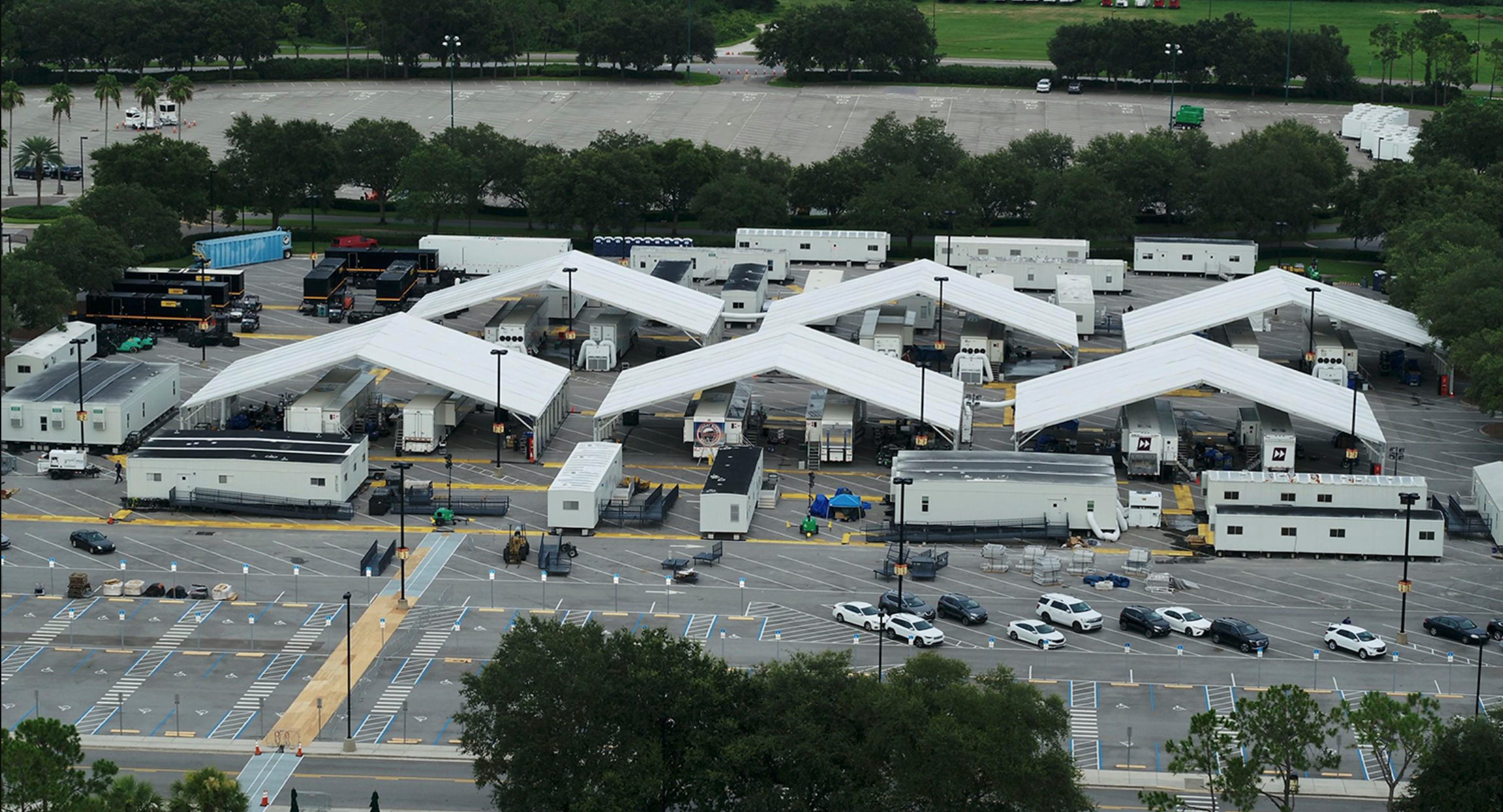
“Before the pandemic, ESPN produced a typical NBA game from one truck, with up to 10 people working snugly within its largest compartment. In the restart compound, there are 13 trucks — two per network per arena, as a means of spreading out workers now divided by plastic shields. They are surrounded by 31 office trailers, 20 generators that supply all of the site’s power, two catering tents and red Coca-Cola machines offering free mid-shift pick-me-ups.”
A recent photo released by ESPN shows the network’s production compound.
Steve Hellmuth, the NBA’s executive vice president of media and technology, also explained the unique opportunity that games without fans in the stands provide for TV productions. Cameras (most of them remotely operated) and microphones can be positioned where they normally couldn’t be, as we’ve seen with the “rail cam” that runs alongside the court.
“‘We had dreamed about all these things and being able to do these things in NBA buildings but were prevented by fans,’ Hellmuth said. ‘But now there are no fans. We knew exactly where we wanted to put the cameras.'”
Any eagerness to try new technology and camera angles is tempered by awareness that viewers largely want a telecast that looks familiar. (Earlier in the season, “floating” camera angles weren’t very popular with fans.)
There is plenty more worth reading in Greif’s article, including the differences ESPN’s Mark Jones has noticed in calling games with no fans and increased use of microphones around players, and just how many cameras are on the Orlando campus to follow players as they arrive at the arena before games.
About Ian Casselberry
Ian is a writer, editor, and podcaster. You can find his work at Awful Announcing and The Comeback. He's written for Sports Illustrated, Yahoo Sports, MLive, Bleacher Report, and SB Nation.