Saudi Arabia just wrapped up its second edition of the Six Kings Slam tennis exhibition, featuring icons such as Novak Djokovic, Carlos Alcaraz, and Jannik Sinner. Rafael Nadal, who competed in the first go-around, is now retired but serves as Saudi Arabia’s official tennis ambassador.
If you are frustrated about this – say, the participants taking photographs with Turki Alalshikh, for whom a wing of a jail in Riyadh is reportedly nicknamed because people are imprisoned there for criticizing him online – you’d best get your grievances off now.
More people are focused on the Riyadh Comedy Festival, which included a number of comedians who accepted a check in exchange for not joking about the regime in which they’d be performing. But that might be old news as well: coming in December is Sandstorm 25, a music festival in Saudi. Artists such as Cardi B, Post Malone, Benson Boone, and Halsey (who has especially progressive views) will be performing there.
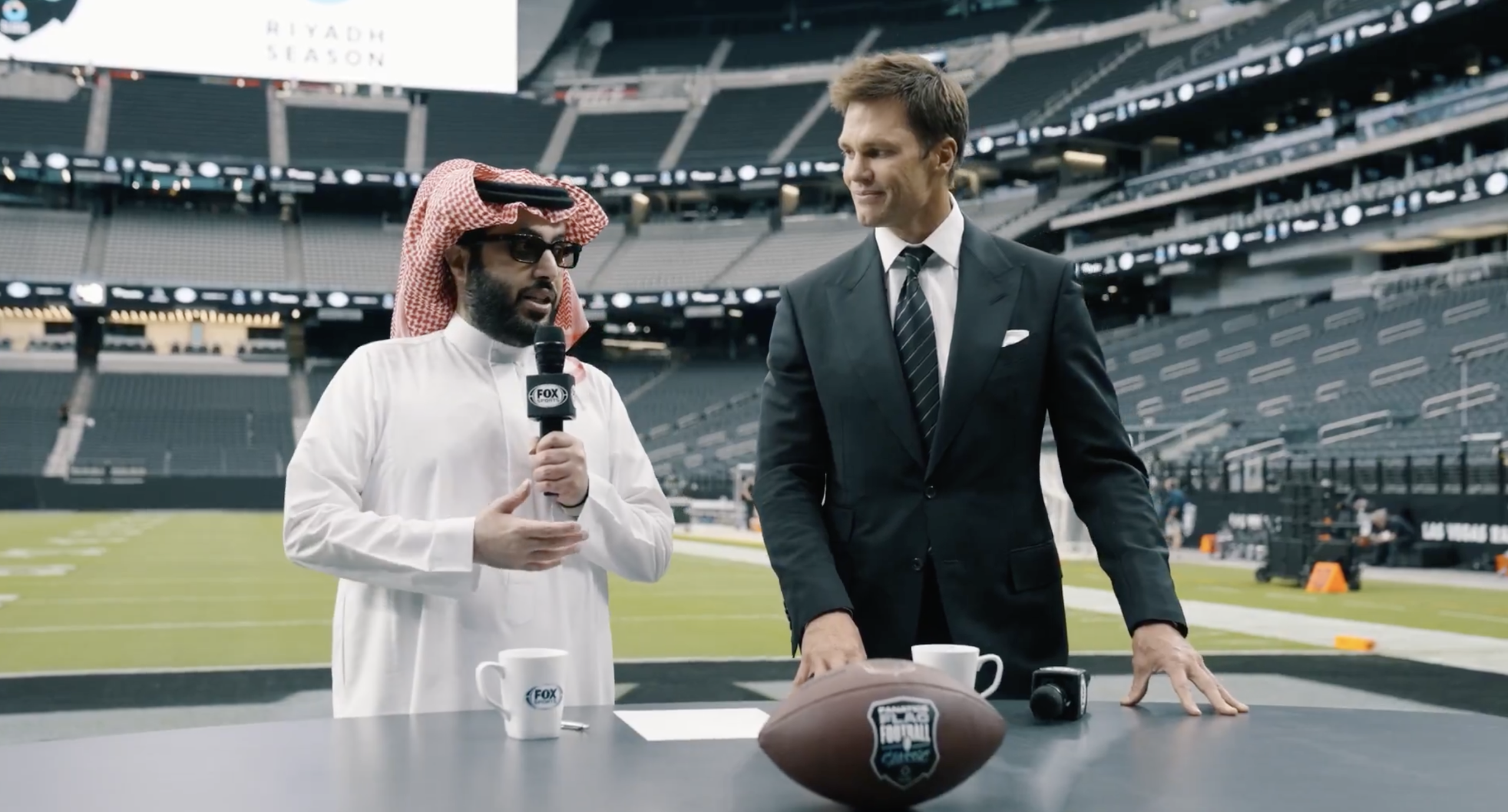
If you’re a football fan, perhaps you’re more aggrieved by Tom Brady signing on for a flag football tournament in Riyadh in March 2026. Wrestling fan? Catch WrestleMania 43 from Riyadh in 2027. Let’s not forget the crown jewel: the World Cup will head to Saudi Arabia in 2034. And one more for the tennis heads: The Athletic reported on Thursday that Saudi Arabia will host a Masters 1000 tournament (the second-largest tournament format on the men’s side), possibly as early as 2028.
Welcome to sports and entertainment in 2025. Saudi Arabia’s desire to diversify its economy – it’s currently centered around oil extraction – and cleanse its image of the human rights atrocities committed in the country is well-publicized. With all these events, they’re doing a fine job.
Zach Helfand, a staff writer for the New Yorker, reported a lengthy feature on the inception of LIV Golf, the Saudi-backed golf league, in 2022. I asked him to compare the current reaction to Saudi’s sports ventures now and then.
“The reaction was pretty negative,” Helfand said of players’ first signing with LIV. “This came not that long after Jamal Khashoggi was killed. So I think for people in the media, it seemed kind of like a betrayal of them, or of freedom of the press, or of the country, to take the money from a regime that was viewed as doing this to make people forget about actions like murder. I think there was also a subset of people who viewed working for a nation that still does horrible things to women, to gay people, stifles dissent, as anti-American.”
As far as fans, “I think a lot of people viewed it in those same terms. I think there was a large subset of fans who thought, ‘This is just bad for golf.’ Most people want to watch all the best players play against each other all the time, and the most competitive golf available. LIV poached a lot of the good players and is just a bad product. I think there are some ideas that are interesting. The execution on those ideas, like the team golf, the draft, kind of came across as Mickey Mouse.”
When players joined LIV, media members asked them about their rationale. Phil Mickelson’s response – acknowledging the human rights atrocities in Saudi Arabia, but hand-waving them away because “this is a once-in-a-lifetime opportunity to reshape how the PGA Tour operates” – didn’t go over well.
“I feel like LIV Golf was the one that got the most backlash, and a lot of that was due to how Phil Mickelson kind of explained his rationale for doing it,” Samer Kalaf, the managing editor at Defector, told me. “The way he did it was so repellent that it made people realize, ‘Oh, this actually is a terrible idea. Maybe we shouldn’t be involved with this.’ But it still went forward.” Kalaf writes critically of athletes and entertainers who participate in Saudi Arabia’s rehabilitation effort, often under amusing headlines like “All Your Favorite Sellouts Will Be At The Riyadh Comedy Festival.”
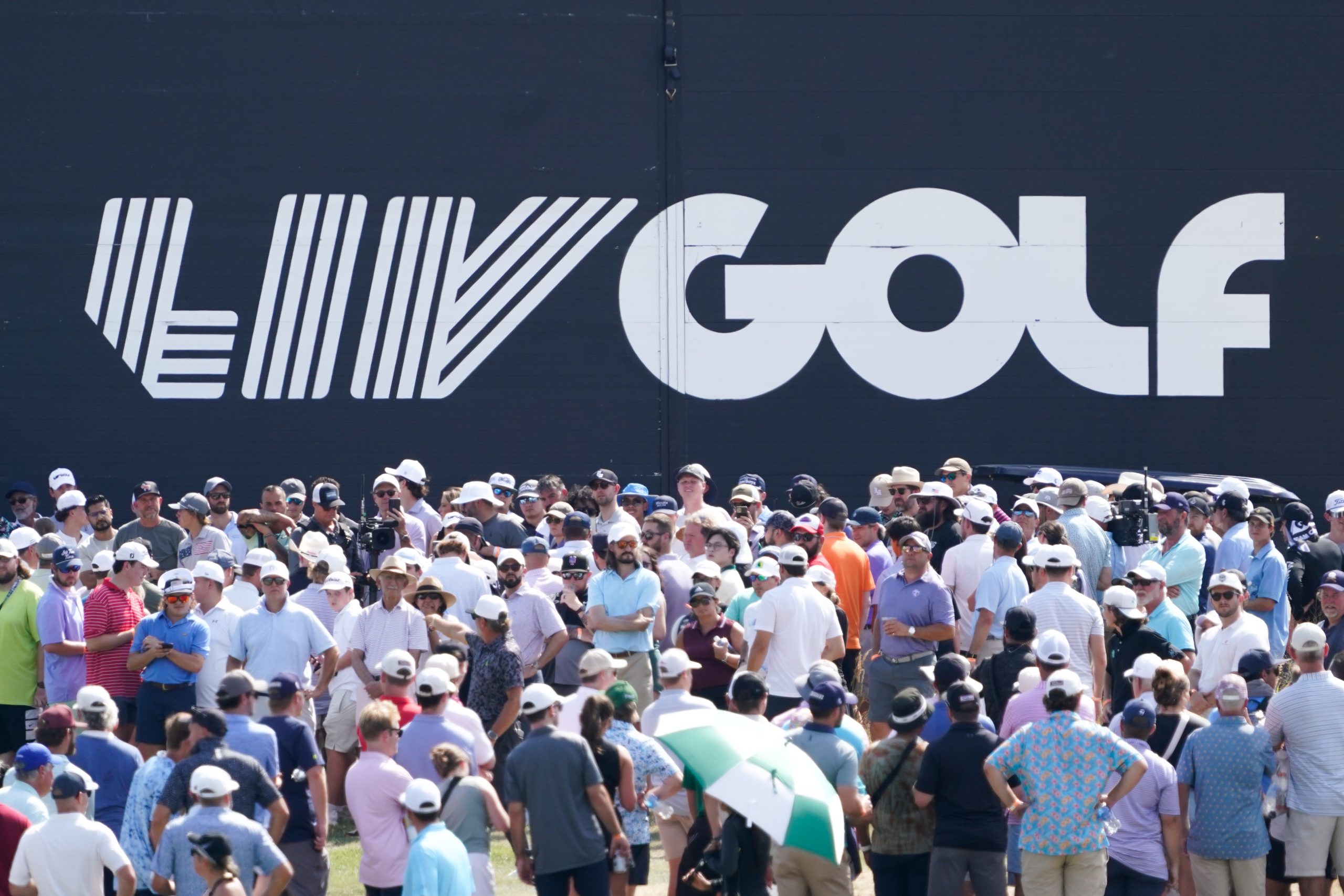
Helfand thinks several golfers lost their credibility in their ham-handed messaging, but “what has happened is, no matter how clumsy the messaging was, if you spend that much money and have that many people that keep repeating the same thing over and over again, it does have an effect. Advertising is effective. It has a psychological effect. I think what’s happened since I reported this piece, people have said these things so often that it fails to garner that outrage.”
As more people take the money, there is less and less of a stigma. In Helfand’s piece, Mickelson relays that a group of media members were playing a game called “What’s your number” – for how much money would you write articles for LIV’s website? “The consensus was between one and five million dollars,” Helfand wrote.
“I was among those on the course who were talking about what our number would be,” Helfand admitted to me. “I think everyone, eventually, has a number… Even the people who have a set of morals and a backbone, eventually, you’re probably going to wilt, or you’re gonna say, ‘Alright, give me enough money, and I’ll do it.’”
Do people care anymore? Brady was in and out of the news cycle in a day after the flag football news. The comedians who participated in the Riyadh Comedy Festival have lingered longer, but that seems natural given that they discuss politics and free speech far more often than athletes, and openly contradicted their long-running screeds to go to Riyadh. “They were talking about how they couldn’t joke about any religion or the Saudi royal family. I feel like that alone compromises the whole persona that a lot of these comedians try to project in their acts elsewhere,” Kalaf said. “I don’t think their careers are going to tank overnight, obviously, but I feel like the more they keep talking about why they did it, the worse off they’re looking. Bill Burr, on his podcast, was recapping his trip and talking about how he had seen all this Western culture in Saudi Arabia, as if he was the first person to ever see it before.”
Kalaf thought Burr and the other comedians had an inflated sense of self-importance. “This has been an ongoing thing for years now: they kind of see themselves as these protagonist diplomats who are doing some kind of mission for international relations, when all it was was getting money for doing a set, and taking that money from a pretty amoral group. It kind of speaks to how these comedians don’t have a real conception of the Arab world. They see it as this monolith – whatever shape it can take to serve as the butt of their jokes.”
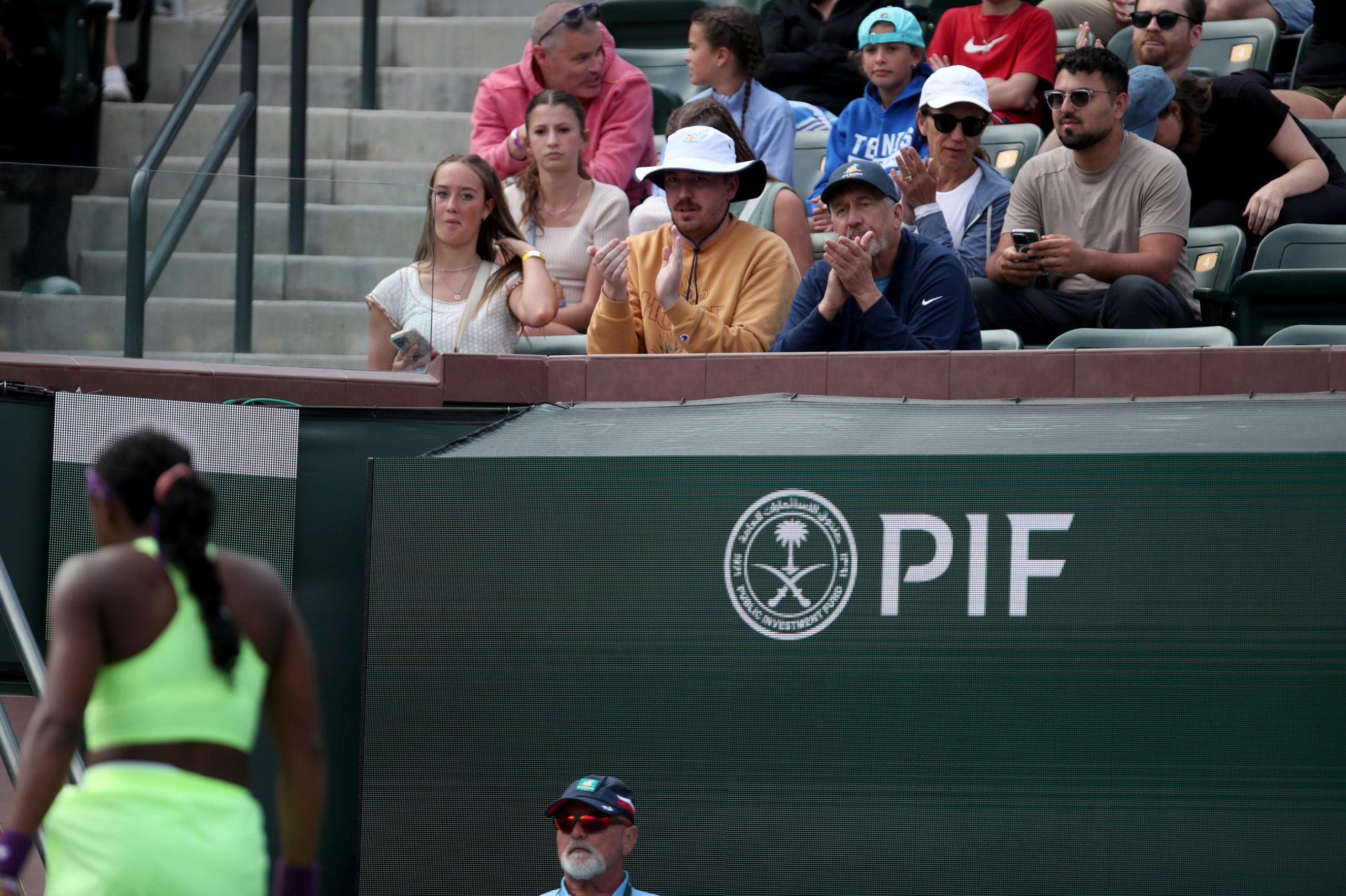
As for athletes, though, scrutiny is diminishing. The second edition of the Six Kings Slam took place earlier this month and attracted less controversy than the first. Ben Rothenberg, an independent tennis journalist who writes for his website Bounces, has critically covered the event. He told me, “I really didn’t get a sense that there was too much pushback from [the participants], from meaningful voices in the locker room or their peers or in tennis’ larger leadership.” Saudi Arabia’s relationship with tennis runs deeper: the Public Investment Fund sponsors both the ATP and WTA rankings, and the WTA Finals are in Riyadh.
“Karl Hale, the director of the Toronto tournament, has made allusions several times during his tournament this year that a Saudi [Masters 1000 event] is fast approaching,” said Rothenberg. We talked several days before the news broke that the Saudi Masters 1000 is now here.
Participants in the Six Kings Slam took pictures with Alalshikh throughout the event and appeared on his social media feeds. “I doubt many [are aware of the “Tutu Wing” of the al-Ha’ir prison],” Rothenberg said. “I certainly haven’t heard tons of players talk about that. And honestly, it would have to be one of the six kings who would have to ‘push back’ on that…I don’t think people are aware of this. I don’t think tennis players are generally very well-read at all, or are poking around behind the curtain of a lot of things going on, unless they directly think it’s costing them money. Saudi is the opposite of that. They’re not gonna look the gift horse in the mouth.”
One reason Saudi Arabia’s strategy is proving successful is its relentlessness. “It does become exhausting after a little while,” Helfand said. “I think to a consumer, it’s like, we’ve heard these things before, let’s move on. And I think this is the smart thing about doing this through sports – ultimately, sports fans want to watch the sport.”
The journalist is also prone to being worn down. How many times can one write the same story? “What Saudi Arabia’s trying to do generally is say, ‘listen, if you’re a critic, you’re gonna have to complain constantly, because this is inevitable. We have so much money, we are going to continue getting comedians, and soccer players, and boxers, and wrestlers, and tennis players, and golfers, and Formula One drivers, and they are going to come to Saudi Arabia whether you like it or not. You can criticize it and throw rocks, but you’re gonna have to keep doing that for a long time, because we have an inexhaustible supply of money,’ Helfand said. “And what they want is that sense of inevitability – if not acceptance, then submission.”
A recent example: when popular ex-ESPN commentator Max Kellerman returned from a two-year stint outside the public eye for the Terence Crawford-Canelo Alvarez superfight, he committed so hard to praising Alalshikh and Dana White (who is partnering with Alalshikh in the new promotion Zuffa Boxing) in the promotion that Alvarez had to interrupt and chasten him, many were disappointed. But there are only so many different ways to write “Max Kellerman sold out,” or complain about it on fan forums. Meanwhile, Kellerman will continue to appear on a boxing talk show, week after week, still cashing checks from the Saudi-owned Ring magazine.
The future of Saudi sporting ventures is unclear, but it doesn’t seem to be slowing in a meaningful way. Rothenberg wonders if, with the World Cup in the distant future, Saudi investment in a comparatively minor sport, tennis, will prove to have been a means to an end. Kalaf fears that the United States under the Trump administration will become an increasingly undesirable destination for foreign acts, making Saudi Arabia an even more attractive option. Some have already levied the argument that performing there is hardly different from performing in the United States, given the latter’s rampant deportations, repealing Roe v. Wade, and financial support of Israel’s genocide in Gaza. But American acts do not entail taking money directly from the federal government in exchange for saying nice things about them and not speaking about their atrocities – at least for now.
The story of athletes and entertainers performing in Saudi Arabia is, for the most part, a financial one. When asked if celebrities taking money from Saudi Arabia is less of a taboo now, Helfand said, “Yeah. It’s like, oh, this is what happens. These guys have lots of money. Athletes would like the money. Of course, they took the money. The other questions become less prominent, because they’ve already been litigated and debated and discussed. The Saudis have won just by staying the course and continuing their strategy.”