It’s not uncommon to feel like everything is happening all at once in modern society. And in the sports world, change is happening at something beyond the speed of light. Between constant expansion, streaming, fragmentation, and rising prices, it’s more challenging and costly than ever to be a sports fan.
And the driving factor behind it all is the unquenched thirst for more revenue from sports leagues. And in that never-ending desire to get paid, it’s the fans who are feeling increasingly left behind.
Everywhere you look in the sports world, fans feel left out. Pick your poison. Streaming deals make it increasingly cumbersome to watch all the games you want. Exorbitant ticket prices that make it impossible to actually attend in person with your family. Beloved traditions and rivalries are cast by the wayside. Expansion that nobody wants in the name of the bottom line is ever-present.
Sports are more popular than ever before. But we are also reaching a breaking point where private equity dollars are becoming more valuable than paying customers. And although it seems we might currently be in a state of equilibrium, the sheer weight and volume of unpopular changes rising in the sports world is becoming a concern.
And it’s not just one sport or one decision. It’s happening everywhere you look.
Feeding the NFL beast
The NFL is by far the most popular sport in the country. But even the most dedicated NFL voices are starting to wonder just how much is too much. The league is expanding its national television footprint at a record pace, with games now expanding to Christmas, Thanksgiving Eve, Wednesday nights, Fridays, Saturdays, and almost every day in between.
While it seems like the NFL is a long way off from falling into the infamous Who Wants to Be A Millionaire? overexposure trap, serious questions are starting to be asked of just how far the league can push forward in this pursuit. They have cannibalized nearly everything in their wake, whether it’s the NBA on Christmas, the College Football Playoff, the World Series, or anything else that stands in their way.
And now the push to perhaps double rights fees in their new television deals has even led to government pressure and possible intervention to protect broadcast networks. And the more the NFL pushes games into standalone windows, the more it erodes the value of Sunday Ticket, which is another major revenue source for the league.
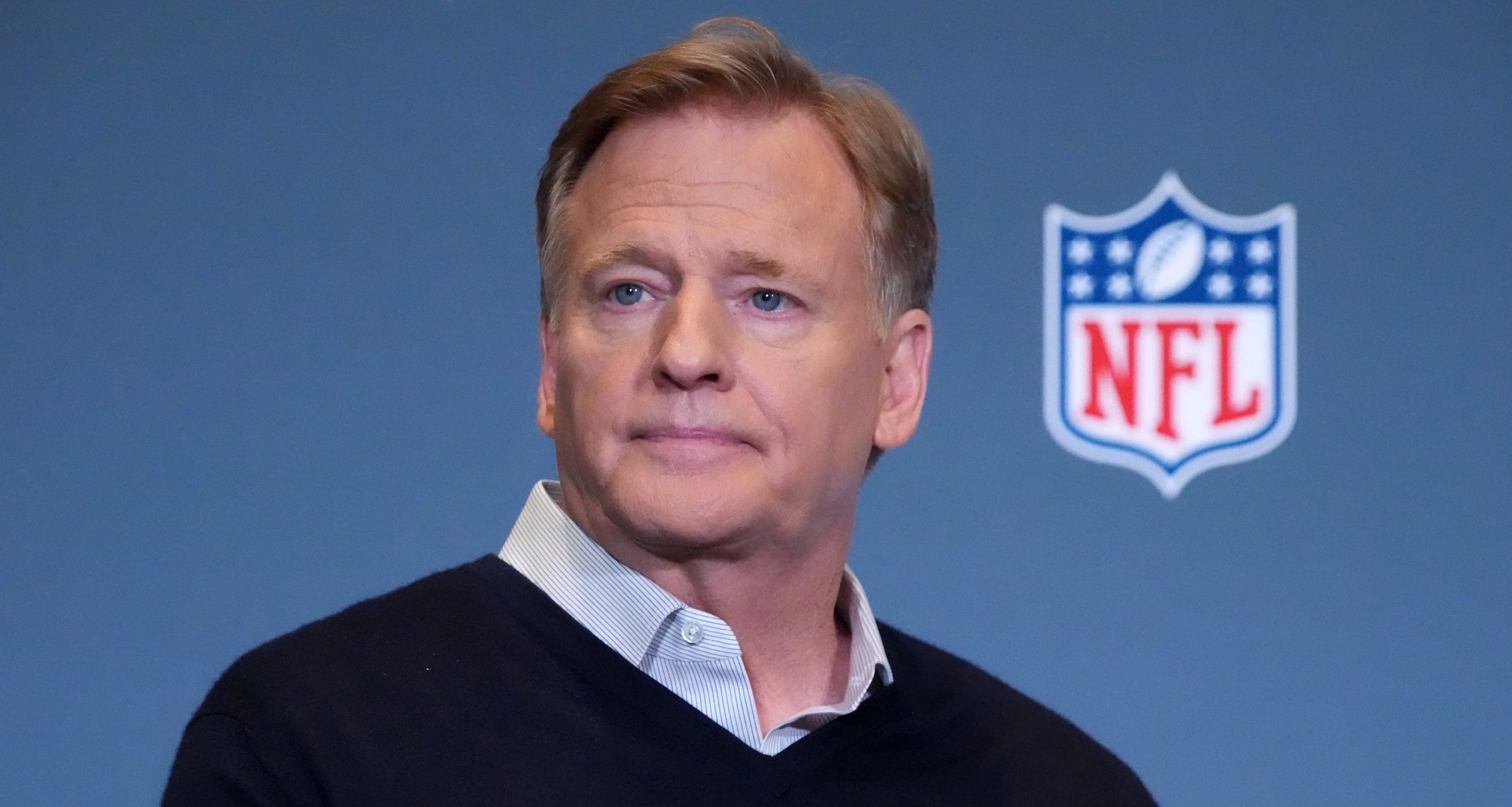
Roger Goodell’s central goal ever since he became NFL commissioner was to increase the NFL’s revenue. Even as far back as 2010, his goal was to reach $25 billion in NFL revenue by 2027. It sounded audacious at the time given the league was under $10 billion, but it sure seems like he’s going to be successful in that endeavor given the league reached $23 billion in 2025.
America can’t get enough football. For now. But there’s no guarantee it will last forever.
Fragmentation and expansion
The NBA has reaped the benefits in viewership this season thanks to its new television deals with NBC, Amazon, and ESPN. However, it has not come without some criticism that the league made it too difficult to find games this year. Major League Baseball is going through a similar process with games and events now being split amongst new partners like NBC and Netflix.
In some ways, at least, this approach has been vindicated. Yes, the streaming relationships can make it more challenging for fans to find games. But viewership has been strong (as the NFL will point to as well) on popular streamers like Amazon and Netflix. So maybe it’s not so much that the platforms are streaming versus linear; it’s that they are spread out across new dates and times, and it’s going to take fans time to adjust when games are on multiple platforms versus a couple of networks you could easily find by memorizing their cable numbers.
And what this leads to is a dizzying maze of how to do what used to be a simple thing in watching a game. You can even throw in the destruction of the regional sports networks into this equation. When fans have to start worrying about double paywalls and which level of ESPN subscription they have, or when exactly their MVPD will deliver on promised access, it makes being a fan a stressful experience that it should not be.
But leagues are also looking to cash in through expansion. Both the NBA and Major League Baseball are exploring adding two teams to match the NFL’s 32-team format. Is it because it’s best for the league and for competition? Or is it because it’s one of the last ways in which the leagues can rake in the dough, thanks to massive expansion fees? The WNBA has capitalized on rising ratings and interest through rapid expansion of their own, adding six teams from 2025-2030. It’s a delicate balance between meeting demand and diluting the product. But it comes with the main goal of making more money, not what’s best for fans or the league.
NCAA expansion nobody wants
Poll any college football or basketball fan, and they will tell you that they are not in favor of expanding either the NCAA Tournament or the College Football Playoff. But March Madness has already moved from 68 to 76 teams, and the College Football Playoff looks certain to balloon to 24 teams.
Both of these decisions are wildly unpopular. The play-in round of the NCAA Tournament, expanded to two full days of action featuring mediocre major-conference bubble teams given a lifeline on Tuesday and Wednesday, is not what made the country fall in love with March Madness. The greatest thing about the tournament is its universality. Everyone is brought in, from passionate basketball fans to office pools around America. How many people want to fill out a 76-team bracket? Or be rushed into it in the few hours on Thursday morning before games tip at noon? Now we have a Frankenstein’s monster of a bracket, and the whole thing feels less special.

And why? Why mess with perfection? So the NCAA can squeeze a few more drops out of its biggest cash cow.
The same is true with the College Football Playoff expanding to 24 teams. It’s being done to create more playoff games, which leads to more television revenue. A 24-team playoff means ESPN and Fox can bid on all those extra games and drive more millions being spent.
But it just might do so at the expense of the best regular season in all of sports. It threatens the very fabric of what makes college football so great: that every game throughout the season actually matters. With a 24-team playoff, suddenly, Top 10 games carry very little real importance. Even epic rivalry clashes like the Ohio State-Michigan game will carry no real playoff implications if both teams are guaranteed a spot entering their final week showdown.
But folks like Big Ten commissioner Tony Pettiti clearly do not have those concerns in mind when the almighty dollar beckons.
Out of sight behind the paywall
Then there are the sports leagues that have entirely given up on any form of accessibility, going behind an exclusive paywall. Major League Soccer was the first to do it by putting its entire product on Apple TV’s MLS Season Pass. But, as has become increasingly evident, it has come at a major cost to the growth of the game. And even now, the league’s own executives are split on its true success. Ever since the Apple TV deal, the league has taken incremental steps to increase access, but is it too little too late?
Now, Formula 1 has made the same decision, casting aside an incredible schedule in which every race was aired on the ESPN airwaves for one in which races are exclusively aired on Apple. F1 was more popular than ever in the States thanks to ESPN coverage and Drive to Survive, but we have no idea how many of those viewers have made the switch and paid up to watch on Apple.
Sure, Apple may say it’s outdrawing ESPN for F1, but without providing the actual numbers, we have no way to reasonably believe that. And the claims simply don’t pass the smell test. F1 may have a few extra million from their Apple deal, but how many fans will they sacrifice in the long run? Every sports fan has the point where the next subscription is one too many. And when faced with limited sports options on Apple, it’s hard to see many casual fans coming along for the ride.
FIFA’s World Cup fiasco
Nothing may be as infuriating to sports fans as what FIFA is doing with the World Cup, though. At least fans know they can watch all the World Cup games on television through Fox Sports, because that’s as close as anyone is getting.
FIFA has intentionally held back tickets over the last year, inflating demand for games and keeping ticket prices astronomically high, even for the least attractive World Cup games. They are also under investigation for potentially misleading individuals who purchased tickets by changing their purchase levels after the fact. And we should mention that this year is also the first tournament to feature an expanded 48-team World Cup, with the likes of Curaçao and the Cape Verde Islands making it. If you want to blame the NCAA for diluting their best events through expansion, just remember FIFA did it first.

World soccer’s governing body has created a situation where even the USA hasn’t sold out its opening game because they are asking so much for tickets. When you then add in the price gouging for everything from parking to transit, it’s no wonder that interest and expected travel are falling well short.
Not to be outdone, the Olympics is also implementing similar dynamic pricing for the Los Angeles Summer Games in 2028, leaving fans spending thousands of dollars years in advance for the privilege of attending events in person.
You could write an entire series of books on FIFA’s greed, corruption, and incompetence over the decades. And Gianni Infantino has potentially even surpassed the infamous leaders of yesteryear by cozying up to dictators, awarding fake peace prizes, and positioning himself as some kind of modern-day Mother Teresa.
But the World Cup ticket prices sting particularly because soccer has always been a game for the masses. And the message is clear from Infantino and company – not anymore.
Private equity and Saudi sportswashing
If there’s one small light at the end of the tunnel in the sports world’s never-ending search for gold, it’s that the one league that was created purely out of financial greed and lust is on the verge of folding. LIV Golf was never meant for fans of the game. It was meant to give Saudi Arabia global access and help build relationships for a controversial regime through sportswashing.
The Saudis spent billions to tear apart golf because they believed that golfers were the easiest marks to help them in their pursuit. In many ways, they were right. Scores of top golfers took the bag to run to LIV Golf and embrace the absurdity. And in the end, LIV Golf is going to meet its demise not because nobody watched and the golfing product failed to impress, but because the Saudis simply decided to stop cutting blank checks.
But that doesn’t mean their activity in the sports world is coming to an end. WWE was one of the first sports companies to cozy up to the Saudis, and next year that will culminate in the unthinkable decision to hold WrestleMania 43 in Riyadh against the wishes of the wide majority of WWE fans.
But it’s not just the Saudis that are turning sports into purely financial endeavors of self-interest. Private equity looms across both professional and college sports, threatening to turn your favorite team into whatever is left of your local mall.
As we look towards the back half of the 2020s, sports are facing an existential question that may shape the next generation. Is it for the fans, or for the billionaire class? Sports are already experiencing declining popularity among younger demographics, which should be a major canary in the coal mine for all leagues and executives. The more complex, convoluted, and expensive it is to be a sports fan, the more those younger demographics will increasingly tune out.
For now, it looks like the power brokers in the industry are all going deeper into the abyss in search of whatever treasure they can find. And if they go much further, they risk leaving every sports fan behind because the revenue graph must go up and to the right at all costs.
About Matt Yoder